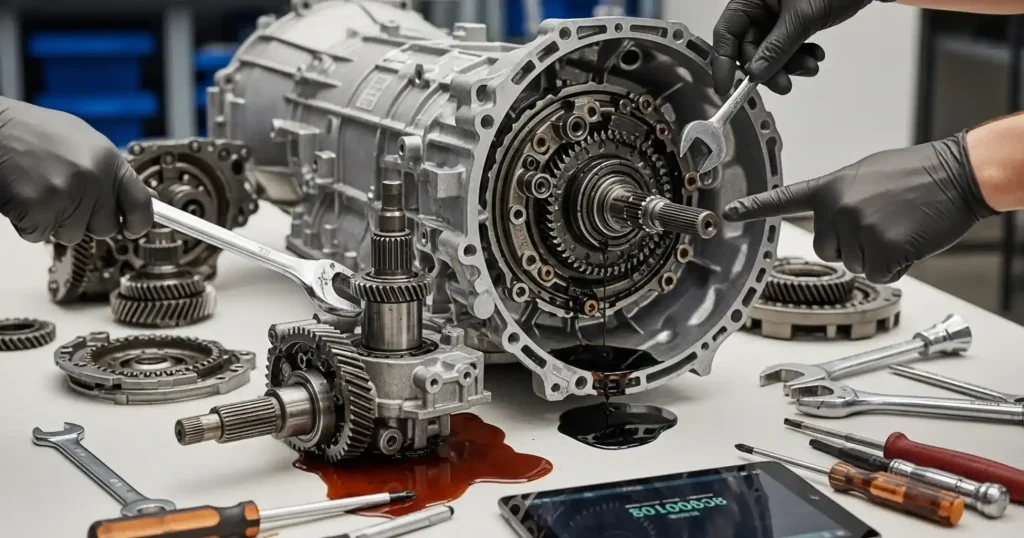
If you drive an automatic car, you may not think much about how it changes gears, but the transmission does all the hard work behind the scenes. A transmission in automatic cars is a key part of the vehicle that controls how power from the engine moves to the wheels. It changes gears automatically as you speed up or slow down, helping the car run smoothly without any gear shifting from the driver.
So, how does it work? An automatic transmission uses sensors, a control unit, and a special fluid to manage when and how gears change. It reads how fast you’re going, how hard you press the gas pedal, and then shifts to the right gear for the situation. You just drive, and the system takes care of the rest.
What Is a Transmission?
A transmission is a system inside your car that controls power and speed. It lets the engine work efficiently at different speeds by changing gears. Without it, the engine would be stuck in one gear and the car wouldn’t move well, or at all.
In an automatic car, the transmission shifts gears for you. It adjusts based on how fast you’re going and how hard you press the gas pedal. You don’t need to use a clutch or shift manually like in a manual car.
How Do Transmissions in Automatic Cars Work?
Automatic transmissions use sensors, fluid pressure, and a control system to manage gear changes. Here’s a simple way to understand it:
- Sensors detect speed, load, and throttle input.
- The control unit tells the gearbox when to shift up or down.
- Hydraulic fluid moves through the system to apply pressure and switch gears.
This system makes driving easier and smoother, especially in heavy traffic.
Types of Automatic Transmissions
There’s more than one kind of automatic transmission. Here are the most common types:
1. Traditional Automatic (Torque Converter)
This is the most common type. It uses a part called a torque converter to change gears. It’s smooth and reliable, found in most family cars and sedans.
2. CVT (Continuously Variable Transmission)
CVTs don’t have fixed gears. Instead, they use belts and pulleys to provide smooth power without gear shifts. They’re common in small cars and hybrids because they improve fuel economy.
3. DCT (Dual-Clutch Transmission)
DCTs use two clutches to shift gears very quickly. They feel sporty and are used in performance cars. Shifts are fast but sometimes jerky at low speeds.
4. Automated Manual Transmission (AMT)
This is a manual gearbox with automatic controls. It’s cheaper and uses fewer parts, but isn’t as smooth as other automatics.
Common Problems in Automatic Transmissions
Even though automatic gearboxes are strong, they can run into trouble over time. Watch out for these common issues:
1. Slipping Gears
If the car changes gears unexpectedly or feels like it has lost power, it may be slipping. This is often due to worn clutches or low fluid.
2. Delayed Shifting
When the car takes too long to move after changing gears, something may be wrong inside the transmission system. You may need an urgent transmission repair service.
3. Strange Noises
Grinding or whining sounds when driving may point to damaged gears or fluid problems.
4. Warning Lights
Many cars show a gear or check engine light when there’s a transmission issue. Don’t ignore these warnings.
Causes of Transmission Problems
Understanding what causes problems can help you avoid them. Here are some common reasons:
1. Low or Dirty Transmission Fluid
Fluid keeps the transmission cool and helps it shift. If it’s low or dirty, the system can overheat or wear out faster.
2. Overheating
Driving in hot weather, towing heavy loads, or aggressive driving can overheat the transmission.
3. Lack of Maintenance
Skipping fluid changes or ignoring warning signs can lead to big repairs later.
4. Faulty Sensors or Software
Modern transmissions rely on electronics. A bad sensor or outdated software can affect shifting.
How to Take Care of Your Automatic Transmission
Caring for your transmission helps it last longer and saves you money. Here’s what you can do:
1. Check Transmission Fluid
Make sure the fluid is clean and at the right level. Follow your car manual for how often to check it.
2. Change Fluid on Time
Most car makers suggest changing transmission fluid every 40,000 to 60,000 kilometers. Dirty fluid can cause serious damage.
3. Drive Smoothly
Avoid sudden stops, quick acceleration, and towing heavy loads without the right setup.
4. Don’t Ignore Early Signs
If you hear odd noises or feel rough shifting, get your car checked right away.
5. Get Regular Service
Visit a trusted auto shop like Al Zaabi Autocare for regular transmission checks.
Is It Safe To Drive With a Bad Transmission?
Driving with a bad transmission can be dangerous. It may slip, shift late, or not move at all. This can leave you stuck or cause more damage to the car. If your car shows signs of a bad transmission, get it checked before the issue gets worse.
Conclusion
The transmission in automatic cars plays a big role in how your car moves and performs. It shifts gears for you, helps save fuel, and makes driving easier. There are different types like traditional automatics, CVTs, and DCTs. Problems like slipping, rough shifting, and strange noises can be signs that something is wrong.
Taking care of your transmission with regular checks, fluid changes, and good driving habits can keep it running smoothly for years. If you think your transmission needs help, visit Al Zaabi Autocare today for expert service and peace of mind.