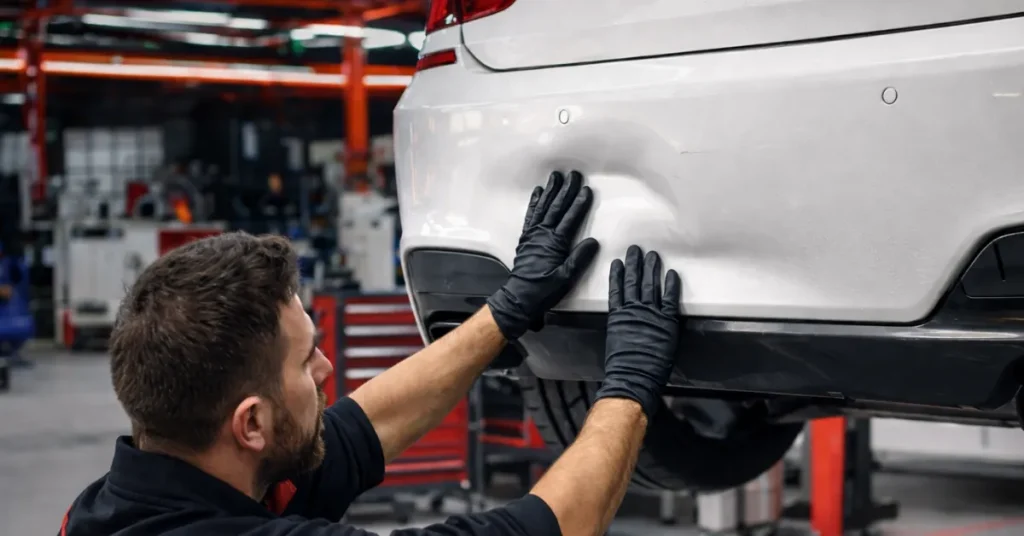
A car bumper dent can often be fixed using simple methods such as hot water, suction cups, or controlled heat when the damage is minor and the bumper is plastic. Quick repair prevents further damage and keeps your car looking new. In this guide, you will learn the causes of bumper dents, step-by-step repair methods, when to try DIY solutions, and when professional help is the safest option.
Why Car Bumper Dents Happen
Car bumper dents usually result from minor impacts, such as parking accidents, low-speed collisions, or hitting road debris. Most modern bumpers are made of flexible plastic. They absorb impact to protect the vehicle, but can lose their shape under pressure. Fixing dents early helps prevent paint damage and keeps your car looking well-maintained.
Can You Fix a Bumper Dent Yourself?
Yes, you can fix a bumper dent yourself if the damage is small and the paint is not cracked. Simple methods like hot water, suction tools, or controlled heat can help reshape plastic bumpers. However, deep dents, cracks, or paint damage usually require professional repair to ensure safe, lasting results.
DIY Methods to Remove a Car Bumper Dent
Below are the most effective methods, clearly explained with tools and step-by-step instructions.
Hot Water Method (Best for Plastic Bumpers)
This method softens the plastic bumper using heat so it can return to its original shape. It is safe and simple for minor dents.
What You Need
- Boiling or very hot water
- A kettle or pot
- Protective gloves
- Access behind the bumper
- Cold water (optional)
How to Apply
Heat the water properly: Boil water in a kettle or heat it until very hot. The heat helps soften the plastic bumper.
Pour hot water over the dent: Carefully pour the water over the dent. This makes the plastic flexible and easier to reshape.
Access the back of the bumper: Reach behind the bumper from inside the wheel well or under the car if possible.
Push the dent outward: Use your hands to gently push the dent back to its original shape. Wear gloves to protect your hands from heat.
Reshape slowly and evenly: Apply steady pressure instead of forcing the bumper. The dent should pop back gradually.
Cool the area: Pour cold water on the bumper to help the plastic harden and keep its new shape.
Check the surface: Inspect the bumper for smoothness. Repeat the process if needed.
Plunger Method (Simple Suction Technique)
A household plunger creates suction pressure that pulls the dent outward. It works well on smooth bumper surfaces.
What You Need
- Clean cup plunger
- Water for better suction
- Soft cloth
How to Apply
Clean the dented surface: Wipe the bumper area to remove dirt and dust. A clean surface improves suction.
Wet the plunger and bumper: Apply water to both the plunger and the dented area. This creates a stronger seal.
Place the plunger over the dent: Press the plunger firmly onto the dent to create suction.
Pull the plunger outward: Use steady force to pull the plunger. The dent may pop back into place.
Repeat if necessary: Try several times if the dent does not come out on the first attempt.
Clean and inspect: Wipe the area and check if the bumper surface is smooth.
Heat Gun or Hair Dryer Method (Controlled Heat Repair)
This method uses controlled heat to soften the bumper material before reshaping it. It provides more precision than hot water.
What You Need
- Hair dryer or heat gun
- Protective gloves
- Aluminium foil (optional)
- Access behindthe bumper
How to Apply
Heat the dented area: Turn on the hair dryer and apply heat to the dent for 2–3 minutes. Keep the dryer moving to avoid paint damage.
Ensure the surface is warm and flexible: The plastic should feel hot but not melting.
Spray compressed air immediately: Hold the can upside down and spray the heated area. The sudden temperature change helps the dent pop out.
Wait for the plastic to reshape: The dent may return to its original shape within seconds.
Repeat if required: Apply heat and compressed air again if needed.
Check for paint damage: Make sure the bumper surface remains intact after the process.
Suction Dent Puller Tool (Advanced DIY Solution)
A suction dent puller is a specialised tool used to remove teeth. It provides a stronger pulling force than a plunger.
What You Need
- Suction dent puller kit
- Clean surface
- Slight moisture
How to Apply
Clean the dented area: Thoroughly remove dust, dirt, oil, and grease from the surface. This ensures strong suction or proper adhesive bonding during the repair process.
Attach the dent puller: Carefully place the suction cup or glue pad directly at the centre of the dent. Proper placement helps achieve better and more accurate results.
Secure the tool firmly: Press down or tighten the puller until a strong seal is achieved. A stable grip helps prevent slipping during the repair.
Pull the dent outward slowly: apply a steady, controlled force as you pull the tool. This helps safely restore the bumper’s original shape without causing additional damage.
Remove the tool carefully: Gently detach the puller or remove adhesive residue from the surface. This prevents scratches or damage to the paint finish.
Check the bumper surface: Inspect the repaired area closely for smoothness and alignment. Repeat the process if the dent is still visible.
Push-From-Behind Method (Manual Pressure Technique)
This method reshapes the bumper manually if you can reach the dent from behind.
What You Need
- Protective gloves
- Flashlight
- Safe access behind the bumper
How to Apply
Locate the dent from behind: Reach behind the bumper, either through the wheel well or under the car. Use a flashlight if needed to clearly see the dent and surrounding edges.
Wear protective gloves: Protect your hands from sharp edges or hot surfaces. This also helps you apply pressure more comfortably and safely.
Apply steady and even pressure: Gently push the dent outward using your hands. Make sure to distribute the force evenly to avoid cracking or deforming the bumper.
Work slowly and carefully: Don’t force the plastic back into shape quickly, as sudden pressure can cause further damage. Gradual pushing ensures the bumper returns smoothly to its original contour.
Check your progress frequently: Periodically step back and inspect the bumper’s surface from the outside. Adjust your pressure or angle as needed until the dent is fully restored.
Finish and inspect: Once the dent is removed, check for any remaining irregularities or paint issues. If the surface is not completely smooth, consider professional car painting finishing for a flawless look.
When DIY Methods May Not Work
Some bumper damage cannot be fixed at home. Attempting repair in such cases may worsen the problem.
Avoid DIY repair if:
- The dent is deep or large
- Paint is chipped or scratched
- The bumper is cracked
- The dent does not move after multiple attempts
Professional repair ensures correct reshaping, repainting, and structural safety. For deep dents or significant damage, visiting a professional auto body shop ensures the bumper is reshaped and refinished safely.
Benefits of Professional Bumper Dent Repair
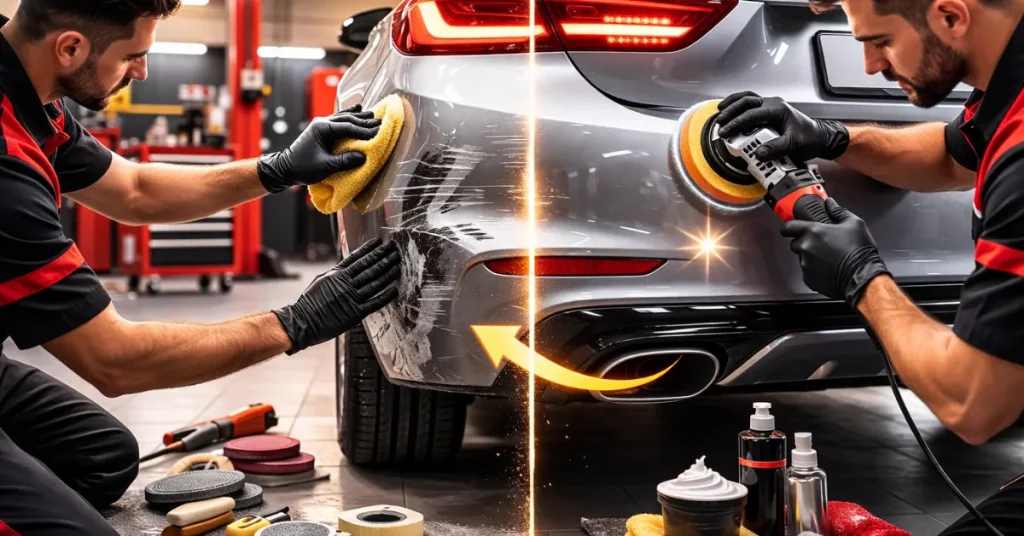
Professional technicians use specialised tools and techniques to perform precise dent repair and fully restore the bumper. This provides better results than basic DIY methods.
Key benefits include:
- Accurate dent removal
- Paint protection and refinishing
- Long-lasting repair quality
- Proper surface restoration
- Prevention of future damage
Expert service from Al Zaabi Auto Care ensures factory-level finish and reliable results.
How to Prevent Future Bumper Dents
Preventing dents helps maintain your vehicle’s appearance and value. Simple precautions can reduce damage risks.
- Park carefully and avoid tight spaces
- Maintain a safe distance while driving
- Install protective coatings or films
- Drive slowly on rough roads
- Perform regular vehicle inspections
Protective treatments and regular maintenance help preserve bumper strength and finish.
Repair vs Replacement: Which Is Better?
For minor bumper dents, repairing the existing bumper is usually the best option. It saves time and money while preserving the original material and restoring the shape.
Replacement is recommended only when the bumper is cracked, severely damaged, or poses a safety risk. A professional inspection from a car repair workshop in Abu Dhabi helps determine whether a repair will provide a long-lasting, smooth finish or if a full replacement is necessary.
Final Thoughts
Removing a car bumper dent is possible using simple methods like hot water, suction tools, or controlled heat when the damage is minor. Quick action prevents further issues and keeps your car looking clean. However, deep dents or paint damage require professional repair to ensure safe, lasting results. Choosing the right repair method protects your vehicle’s appearance, value, and long-term performance.