
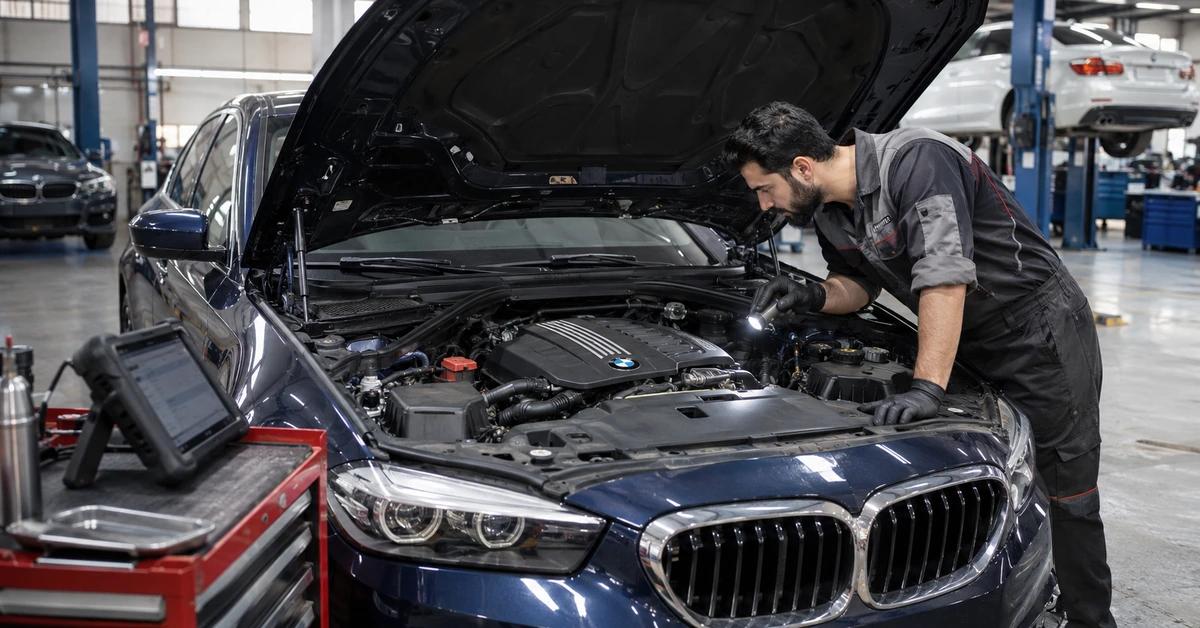
BMW Engine Problems You Should Never Ignore
BMW cars are known for their strong engines, smooth performance, and advanced technology. However, even a well-maintained BMW can develop engine problems over time.
13 November 20269 minute readAll 128 guides
Quick Summary
Most BMW engine problems start with small signs, like a warning light, an oil leak, or a rough idle. The most common faults are overheating, oil and coolant leaks, timing chain wear, misfires, turbo faults, and high oil use. UAE heat and heavy traffic add extra stress to the engine. Acting on the first sign helps BMW owners avoid costly repairs.
BMW cars are known for their strong engines, smooth performance, and advanced technology. However, even a well-maintained BMW can develop engine problems over time. Small warning signs can turn into serious mechanical faults if they are left untreated.
BMW engine problems can include oil leaks, coolant loss, overheating, timing chain wear, engine misfires, and unusual noises. Some issues may start with a warning light or a small change in engine performance.
Others may cause sudden power loss or make the engine unsafe to drive. In the UAE, high temperatures and heavy traffic can put extra pressure on engine cooling and lubrication systems. Knowing these warning signs can help you avoid costly repairs and protect your BMW's engine.
Most Common BMW Engine Problems You Should Know
1. Engine Overheating
Engine overheating is one of the most serious problems you should never ignore in a BMW. The cooling system keeps the engine at a safe operating temperature by moving coolant through the engine, radiator, and other parts. If this system stops working properly, the engine temperature can rise quickly.
Common signs include a temperature warning, steam from the engine area, coolant loss, and a sweet smell from the engine bay. Possible causes include a faulty water pump, damaged radiator, leaking coolant hose, or a stuck thermostat. Stop the car safely if the engine overheats and switch it off. Never open the coolant cap while the engine is hot.
2. Engine Oil Leaks
Oil leaks are common warning signs in older BMWs and some high-mileage models. Engine oil keeps moving parts lubricated and reduces friction between components. When oil escapes through damaged seals or gaskets, the engine may not receive enough lubrication.
Some common leak points include:
- Valve cover gasket
- Oil filter housing gasket
- Oil pan gasket
- Front and rear crankshaft seals
- Oil cooler seals
You may notice oil spots under the car, a burning oil smell, or smoke from the engine bay. Low oil levels can increase friction and cause serious internal damage. Get the leak checked instead of repeatedly adding oil without fixing its source.
3. Timing Chain Problems
The timing chain keeps the crankshaft and camshaft moving in the correct order. This allows the engine valves to open and close at the right time. If the chain becomes loose or its guides wear out, the engine may produce unusual sounds and develop timing-related faults.
Common warning signs include rattling during a cold start, rough idling, reduced engine power, and check engine warnings. Some BMW engine families, including certain N47 diesel engines, have known timing chain concerns. However, the risk depends on the engine generation and model.
If you hear a repeated metallic rattle from the timing chain area, arrange an inspection quickly. A chain that jumps or breaks can cause major internal engine damage.
4. Engine Misfires and Rough Idling
An engine misfire happens when one or more cylinders fail to burn the air and fuel mixture properly. This can affect engine power, fuel use, and overall performance. You may notice shaking when the car is stopped, slow acceleration, or a rough engine sound.
Common causes include:
- Worn spark plugs
- Faulty ignition coils
- Damaged fuel injectors
- Vacuum leaks
- Low fuel pressure
- Compression problems
A BMW diagnostic scan can help identify misfire codes and the affected cylinder. A mechanic may then inspect the ignition system, fuel supply, and engine compression. Do not ignore repeated misfires because unburned fuel can damage the catalytic converter over time.
5. Coolant Leaks and Low Coolant Levels
The coolant system protects the engine from excessive heat. If coolant levels keep dropping, there may be a leak in the radiator, expansion tank, water pump, or connecting hoses. Some BMW engines can also develop leaks around the thermostat housing and coolant pipes.
Warning signs include a low coolant message, a sweet smell, visible fluid under the car, and frequent temperature changes. In some cases, coolant may leak internally due to a damaged head gasket.
Check the coolant level only when the engine is completely cool. If you need to refill it repeatedly, get the system pressure-tested to find the leak. Simply adding more coolant will not solve the underlying problem.
6. Excessive Engine Oil Consumption
Some BMW engines use more oil than expected, especially as they get older or develop internal wear. However, frequent oil top-ups should never be treated as normal without checking the cause.
Possible reasons include worn piston rings, valve stem seals, crankcase ventilation problems, and turbocharger seal damage. A faulty PCV (Positive Crankcase Ventilation) system can allow oil vapour to enter the intake system and increase oil consumption.
You may notice blue smoke from the exhaust, low oil level warnings, or oil deposits inside the intake pipes. A workshop can check for external leaks, inspect the PCV system, and perform a compression or leak-down test to find the source.
7. Unusual Engine Knocking or Ticking Noises
A healthy engine should run without loud or sudden mechanical noises. If you hear knocking, tapping, ticking, or grinding sounds, the engine may have a problem that needs attention.
Different sounds can point to different faults:
- Knocking: May indicate worn engine bearings or incorrect combustion.
- Ticking: Can come from valve train components, hydraulic lifters, or fuel injectors.
- Rattling: May suggest loose heat shields, worn timing chain guides or other loose parts.
- Grinding: Can point to a serious mechanical fault or a damaged rotating component.
The sound's location, timing and speed can help a mechanic identify the cause. Avoid hard acceleration until the problem has been checked, especially if the noise is loud or getting worse.
8. Turbocharger Problems
Many modern BMW petrol and diesel engines use turbochargers to improve power and engine efficiency. A turbocharger uses exhaust gas to spin a turbine, which helps push more air into the engine. This allows the engine to produce more power from its size.
However, turbocharger parts can wear out due to heat, oil supply problems or long-term use. Common warning signs include:
- Reduced engine power
- Whistling or whining sounds
- Excessive exhaust smoke
- Increased oil consumption
- Poor acceleration
- Engine warning messages
Possible causes include damaged turbo seals, worn bearings, boost leaks and faulty boost control components. A mechanic should check the turbocharger, oil supply lines and intake pipes before deciding whether repair or replacement is needed.
9. Loss of Engine Power and Poor Acceleration
If your BMW suddenly feels slower than usual, there may be a problem with the engine or one of its related systems. You may notice delayed acceleration, weak pulling power or difficulty reaching higher speeds.
Common causes include a blocked air filter, faulty mass airflow sensor, fuel delivery problems, boost leaks, and clogged fuel injectors. In turbocharged models, a boost pressure leak can prevent the engine from producing its normal power.
Some BMWs may enter limp mode when the engine control unit detects a serious fault. This limits engine power to help protect important components. A diagnostic scan can help identify stored fault codes and guide further testing.
10. Check Engine Light and Warning Messages
The check engine light is one of the first signs that something may be wrong with your BMW. It can turn on due to a small sensor issue or a more serious engine fault. Ignoring it without checking the cause can allow a minor problem to become more expensive.
Common reasons include faulty oxygen sensors, ignition problems, fuel system faults, air intake leaks, and emissions-related issues. A diagnostic scanner can read fault codes stored in the DME (Digital Motor Electronics), which controls important engine functions.
If the check engine light flashes, reduce engine load and stop driving if the engine runs roughly or loses power. A flashing warning can indicate an active misfire that may damage the catalytic converter.
Why Do BMW Engines Face Problems in the UAE?
The UAE's weather and driving conditions can put extra pressure on BMW engines. Summer temperatures often rise above 40°C, while traffic in busy areas can keep engines running for long periods without much airflow.
Some conditions that can affect engine performance include:
- High temperatures: Increase the demand on the cooling system.
- Heavy traffic: Frequent stopping and starting can increase engine heat.
- Dust and sand: Can affect air filters and reduce airflow.
- Long driving hours: Put extra demand on engine oil and cooling components.
- Poor maintenance: Old oil and worn coolant parts can increase the risk of engine damage.
Regular oil changes, coolant checks, air filter replacement and cooling system inspections are important for BMW owners in the UAE. Following the correct service schedule can help reduce the risk of unexpected breakdowns.
How to Prevent Common BMW Engine Problems
Regular maintenance is one of the best ways to protect your BMW engine. Many major engine faults begin with smaller issues that could have been found during routine servicing.
Follow these maintenance practices:
- Change engine oil and the oil filter at the recommended intervals.
- Use engine oil that meets the correct BMW specifications for your model.
- Check coolant levels and inspect hoses for leaks.
- Replace spark plugs according to the service schedule.
- Inspect ignition coils if the engine starts misfiring.
- Keep the air filter clean to maintain proper airflow.
- Check for unusual engine noises during cold starts.
- Get warning lights checked instead of clearing them without repairs.
- Inspect the timing chain system when symptoms or service history suggest a problem.
Also, allow the engine to warm up through normal driving before demanding high power. Avoid hard acceleration when the engine is cold.
When Should You Take Your BMW to a Workshop?
You should arrange a professional inspection as soon as you notice repeated engine warnings, oil leaks, coolant loss, unusual sounds, or changes in performance. Early checks can help identify the faulty part before it affects other engine components.
However, some problems need immediate attention. Stop the car safely and switch off the engine if you notice a red oil pressure warning, severe overheating, heavy knocking, or significant smoke. Do not continue driving in these conditions.
A qualified mechanic can perform a diagnostic scan, pressure test, compression test and visual inspection to find the cause. A proper diagnosis is important because the same warning sign can have different causes in different BMW models and engine types.
Frequently Asked Questions
Is it safe to keep driving a BMW that is overheating?
No, you should stop driving as soon as the engine overheats. Pull over safely and switch the engine off. Never open the coolant cap while the engine is hot. Heavy knocking, a red oil pressure warning, or a lot of smoke are other signs to stop right away.
What does a flashing check engine light mean on a BMW?
A flashing check engine light can mean the engine has an active misfire. Unburned fuel from a misfire can damage the catalytic converter over time. Reduce the engine load, and stop driving if the engine runs roughly or loses power. A diagnostic scan can then read the stored fault codes.
Why is my BMW using so much engine oil?
A BMW can burn extra oil because of worn piston rings, worn valve stem seals, a faulty PCV system, or a damaged turbo seal. Blue smoke from the exhaust and low oil warnings are common signs. A workshop can check for leaks and run a compression or leak-down test to find the cause.
What causes a rattle when a BMW starts from cold?
A rattle on a cold start often points to a loose timing chain or worn chain guides. Some engines, such as certain N47 diesels, have known timing chain concerns. Get it checked quickly, because a chain that jumps or breaks can cause major damage inside the engine.
Can you keep topping up coolant instead of fixing the leak?
No, adding more coolant will not fix the problem behind it. A level that keeps dropping points to a leak in the radiator, expansion tank, water pump, hoses, or thermostat housing. A pressure test can find the leak. Only check the coolant when the engine is fully cool.
Conclusion
BMW engine problems can start with small warning signs such as oil leaks, unusual noises, rough idling, or reduced power. Other serious issues include overheating, timing chain wear, turbocharger faults, and low oil pressure. Ignoring these signs can lead to major engine damage and higher repair costs.
Pay attention to warning messages, follow the recommended service schedule, and get unusual engine behaviour checked early. Regular inspections are especially important in the UAE, where high temperatures and heavy traffic can put extra pressure on engine parts.
If your BMW is showing engine warning lights, losing power, leaking oil, or making unusual noises, contact Al Zaabi Autocare for a professional inspection. Get the right diagnosis and repair your BMW engine before a small issue turns into a major problem.
Car Engine Repair at Al Zaabi Autocare
From a misfire or a warning light through to a full rebuild. We diagnose first, quote in writing, and only then open the engine, so you are never paying to find out what is wrong twice.
- Computer diagnostics and compression testing
- Cylinder head and gasket work
- Timing belt and chain replacement
- Full engine overhaul and rebuild
Other Engine and exhaust Guides
Think this is what your car is doing?
Bring it in and we will tell you. Free 360-degree health check and a written quote before any work starts.
- Where we are
- Plot no 69, Mussafah M-37, Abu Dhabi, UAE
- Opening hours
- Mon to Sat 9:00 AM to 10:00 PM
Sunday 9:00 AM to 7:00 PM