

Why Does My Car Shake When Braking?
Shaking when braking is one of the most common brake complaints drivers report. Brakes are the most important safety system on any car, so any change in how they feel is a warning worth taking seriously.
25 November 20267 minute readAll 134 guides
Quick Summary
A car usually shakes when braking because the brake discs have uneven thickness, often called warped rotors. Uneven pad deposits, a sticking caliper and badly worn pads can also cause it, while worn suspension or steering parts, loose wheel bearings and hub rust make it worse. Where you feel the shake points to the source: the steering wheel for the front brakes, the seat for the rear. A fast pulse only in hard stops is normal ABS operation.
Shaking when braking is one of the most common brake complaints drivers report. Brakes are the most important safety system on any car, so any change in how they feel is a warning worth taking seriously.
Your car shakes when braking mainly because the brake discs have uneven thickness, a problem often called warped rotors. Uneven pad deposits on the discs, a sticking brake caliper and badly worn pads can also cause shaking.
Worn suspension or steering parts, loose wheel bearings and rust between the hub and disc make the problem worse. If you only feel a fast pulse during a hard emergency stop, the ABS may simply be working as designed.
How Brake Shaking Happens
When you brake, the pads squeeze the spinning disc. If the disc is perfectly even, braking feels smooth. If one part of the disc is thicker than another, the pads grab harder on the thick spots and less on the thin ones.
This creates a pulse that travels into the steering wheel, pedal or body. According to Delphi, writing in PMM, disc thickness variation is the main cause of brake judder. It can come from poor disc fitting, poor bedding-in, overheating, seized calipers or poor manufacturing.
Where You Feel the Shaking
The place you feel the shaking helps show which brakes are at fault.
| Where you feel it | Likely source | What it usually means |
|---|---|---|
| Steering wheel | Front brakes | Uneven front discs or worn front suspension |
| Brake pedal | Front or rear brakes | Uneven discs or pad deposits |
| Seat and body | Rear brakes | Uneven rear discs or sticking rear caliper |
| Whole car with grinding noise | Pads worn to metal | Urgent pad and disc replacement |
| Fast pulse only in hard stops | ABS system | Normal ABS operation |
The front brakes do most of the stopping work, so they wear and overheat more. That is why steering wheel shake is the most common complaint.
Main Causes of Shaking When Braking
Uneven Disc Thickness (Warped Discs)
Most people call it warped discs, but the real problem is usually uneven thickness across the disc surface. Even a tiny difference, less than the thickness of a human hair, can be felt as a pulse.
Uneven thickness builds up when the disc wears unevenly, often because of heat, rust spots or a disc that was not fitted perfectly flat on the hub. Over time, the difference grows and the shaking gets worse.
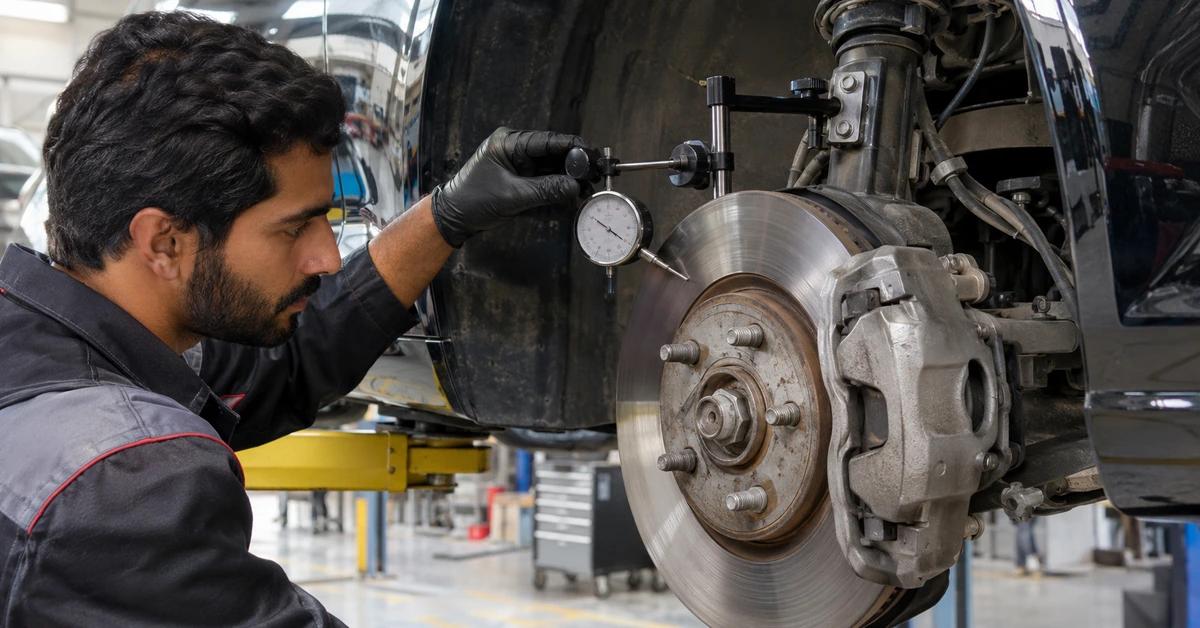
Measuring disc thickness at several points with a micrometer confirms the fault and shows whether the discs can be saved.
Uneven Pad Material Deposits
Brake pads leave a thin layer of friction material on the disc as they work. This is normal and helps braking when the layer is even. If the brakes get very hot and the car is then held still with the brake pressed hard, pad material can stick to one spot on the disc.
These patches grip differently from the rest of the surface and cause a pulse. This often happens after hard braking from high speed followed by sitting at traffic lights with the brakes firmly applied.
Sticking Brake Calipers
The caliper holds the brake pads and pushes them against the disc. If a caliper piston or slide pin sticks, the pads may rub the disc all the time. This creates extra heat, uneven wear and shaking under braking.
Other signs include the car pulling to one side, a burning smell after driving or one wheel feeling much hotter than the others. Sand and moisture in the UAE can make slide pins seize. Cleaning and lubricating the slides, or replacing the caliper, usually fixes the problem.
Worn Brake Pads
When pads wear very thin, they may wear unevenly or let the metal backing plate touch the disc. This causes grinding noises, shaking and fast disc damage. Worn pads also reduce stopping power, which is dangerous.
Most modern cars have wear sensors that show a warning light when pads get low. Knowing the warning signs to replace brake pads on time protects the discs and keeps braking smooth. Pads and discs are often replaced together when shaking has already started.
Worn Suspension and Steering Parts
Braking pushes the car's weight forward and puts heavy load on the front suspension. If ball joints, tie rod ends or control arm bushings are worn, they let the wheel move slightly under braking.
This movement can turn a small brake pulse into a strong shake through the steering wheel. Sometimes the brakes are fine and the suspension alone is to blame.
A technician checks for play in these parts whenever brake shaking is reported, because fixing only the brakes may not solve the whole problem.
Wheel Bearings and Hub Rust
A loose or worn wheel bearing lets the disc wobble as it spins. This wobble, called runout, makes the pads touch the disc unevenly and quickly causes thickness variation. Rust or dirt between the wheel hub and the disc can also stop the disc from sitting flat.
Even a small speck can create runout once the wheel is tightened. Cleaning the hub face carefully whenever discs are replaced, and checking bearings for play, prevents shaking from returning soon after a brake job.
ABS Pulsing Is Normal
Not all pulsing is a fault. During a hard or emergency stop, especially on loose or slippery surfaces, the anti-lock braking system rapidly releases and reapplies the brakes to stop the wheels from locking.
You may feel a fast buzzing pulse in the pedal and hear a grinding or clicking noise. This is normal and means the system is working. If you feel pulsing during gentle, everyday braking on dry roads, though, the cause is likely in the discs or pads.
Why UAE Driving Makes Brake Shaking Worse
Driving in the UAE puts brakes through tough conditions. Cars often slow from high highway speeds into heavy traffic, which builds a lot of heat in the discs. High air temperatures mean the brakes cool down more slowly.
Sitting in traffic with the brakes held hard after a fast stop can leave pad deposits on hot discs. Fine sand and dust also wear pads and discs and can make caliper slides stick. Using low-quality parts adds to the problem, because cheap brake pads often overheat and wear discs unevenly.
How Shaking When Braking Is Fixed
The right fix depends on what the inspection finds.
| Fix | When it is used | What it involves |
|---|---|---|
| Disc resurfacing | Discs above minimum thickness with mild variation | Machining the discs flat again |
| Disc and pad replacement | Discs too thin, cracked or badly uneven | New discs and pads fitted as a pair on the axle |
| Hub cleaning | Rust or dirt behind the disc | Cleaning the hub face before refitting |
| Caliper service or replacement | Sticking pistons or slide pins | Cleaning, lubricating or replacing the caliper |
| Suspension repair | Worn joints or bushings | Replacing worn parts and checking alignment |
| Bedding-in new pads | After any pad or disc change | Controlled stops to lay down an even pad layer |
Many luxury and performance cars use thinner or special discs that cannot be resurfaced, so replacement is often the safer choice.
How to Prevent Brake Judder
Good habits help brakes stay smooth for longer. After fitting new pads or discs, bed them in with a series of moderate stops so the pad material spreads evenly. Avoid holding the brake pedal hard while stopped after heavy braking, and leave more space in traffic so you can slow down gently.
Make sure wheel nuts are tightened with a torque wrench in the correct pattern, because uneven tightening can bend the disc slightly. Choose quality pads and discs, and have the brakes checked at every service.
How Al Zaabi Autocare Fixes Brake Shaking
Al Zaabi Autocare starts with a road test to feel the shaking and confirm when it happens. Technicians then measure disc thickness and runout, inspect pads and calipers, and check wheel bearings and suspension parts for play.
Repairs use quality parts, and new pads are bedded in correctly before the car is returned. The brake service covers everything from pad replacement to caliper repair for everyday cars and luxury models alike. Performance cars with large or carbon ceramic discs get the same care, with the right luxury brake pads chosen for each model.
Frequently Asked Questions
Is it safe to drive if my car shakes when braking?
Mild shaking is not an immediate emergency, but it means the brakes are not working evenly. It should be checked soon. If the shaking is strong, comes with grinding noises or the car pulls to one side, stop driving and have it inspected right away.
Can new brake pads stop the shaking?
Usually not on their own. If the discs have uneven thickness, new pads will still pulse against them. In most cases, the discs need resurfacing or replacing along with the pads, and the hub must be cleaned so the new disc sits flat.
Why does my car shake when braking at high speed only?
At high speed, the brakes build more heat and small disc defects become easier to feel. Uneven disc thickness, pad deposits or worn front suspension parts are the usual causes. Shaking only at high speed still needs checking before it gets worse.
Can wheel alignment cause shaking when braking?
Alignment itself rarely causes brake shaking. However, the worn suspension parts that throw alignment out can make braking feel shaky. A full check of brakes, suspension and alignment together gives the clearest picture of what is wrong.
How long do brake discs last in the UAE?
It depends on the car, driving style and the quality of the parts. Heavy traffic, high speeds and heat can shorten disc life. Many discs last through two sets of pads, but they should be measured at every brake service to check their thickness.
Conclusion
A car that shakes when braking is telling you that the brakes are no longer working evenly. Uneven disc thickness is the most common cause, often helped along by heat, pad deposits or sticking calipers. Worn pads, suspension parts, wheel bearings and hub rust can also play a part.
Fixing the root cause, not just the most obvious part, keeps braking smooth and safe for longer. Get a full inspection and lasting repair through the brake service at Al Zaabi Autocare in Mussafah.
Car Brake Service at Al Zaabi Autocare
We measure pad and disc thickness rather than guess, so you replace what is worn and keep what is not. Every brake job finishes with a road test and a brake fluid check.
- Brake pad and disc measurement
- Pad and disc replacement
- Caliper repair and replacement
- Brake fluid change and bleeding
Other Brakes Guides
Think this is what your car is doing?
Bring it in and we will tell you. Free 360-degree health check and a written quote before any work starts.
- Where we are
- Plot no 69, Mussafah M-37, Abu Dhabi, UAE
- Opening hours
- Mon to Sat 9:00 AM to 10:00 PM
Sunday 9:00 AM to 7:00 PM