

Can Chassis Damage Be Repaired
The term "chassis" refers to your car's frame. It is the most important component of your car, as it strongly holds all the parts of your car.
18 September 20244 minute readAll 129 guides
Quick Summary
Yes, chassis damage can usually be repaired, but the method depends on how bad the damage is. Minor damage can often be fixed by welding or patching. Widespread damage means replacing the affected section, and severe cases may need a whole new chassis. The five common types are sagging, twisted, sway, mashed, and rusted chassis damage.
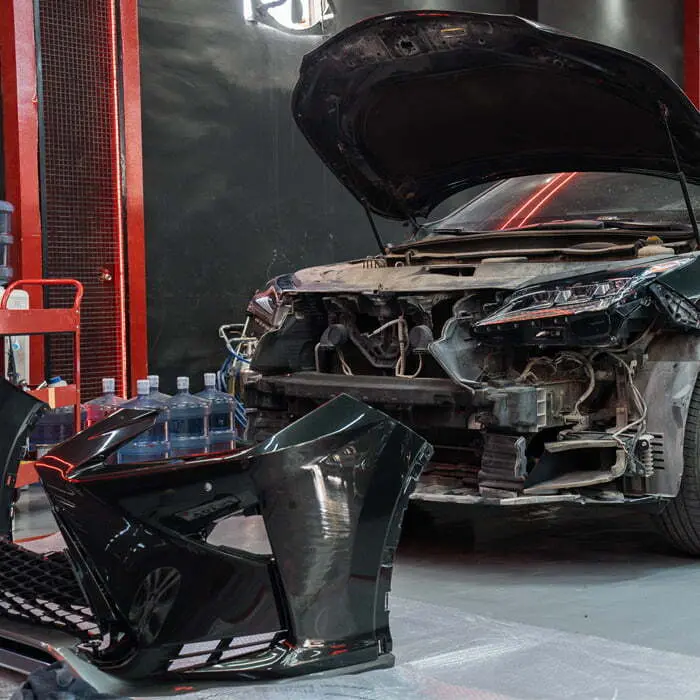
The term "chassis" refers to your car's frame. It is the most important component of your car, as it strongly holds all the parts of your car. Chassis damage does not only affect your car's performance or appearance but also threatens its structural integrity.
Many people are wondering whether chassis damage can be repaired or not. Yes, chassis can be repaired, and the extent of the repairing work required to fix it depends upon the condition of your chassis. If the damage is not too severe, then you can fix it by welding or patching. But if the damage is more widespread, then you need to replace or change the affected part.
Five Types of Chassis Damage
Sagging Chassis Damage
When your vehicle has been in an accident or collision, then sometimes gaps appear in your vehicle body because some parts of the frame become uneven; this is known as sagging chassis damage or sagging frame damage.
Assessment: It typically becomes apparent when your car parts start to lean inwards the gaps and exert extra strain and pressure over its wheels and coils that can affect your car's wheel alignment.
Twisted Chassis Damage
When your vehicle collides with an external object, then your frame gets twisted and causes twisted chassis damage.
Assessment: It is more difficult to diagnose this frame damage until a skilled technician does a comprehensive check because it doesn't result in gaps in the car. You acknowledge this problem when you find difficulty while driving or handling the steering. You need to fix it instantly; otherwise, it can wear down your tyres and coils quickly.
Corner or Sway Chassis Damage
Sway chassis damage frequently results from a collision with one of your vehicle's corners. It is also known as corner chassis or frame damage. It occurs when you try to turn your vehicle's wheel to avoid an accident.
Assessment: You diagnose this sway chassis damage when you notice vibrating and rubbing noises emanating from your vehicle and your vehicle is leaning to one side. You won't be able to drive straightforwardly.
You need to repair it as soon as possible; otherwise, you have to get car transmission repair because chassis misalignment can affect your vehicle transmission.
Mashed Chassis Damage
When your car gets hit from behind or impacted directly, the frame collapses in on itself and reduces its length to less than the manufacturer's specification; it is known as mashed chassis damage or mashed frame damage.
Assessment: You can easily access the mashed chassis damage as deformation and wrinkles are clearly visible on your vehicle's hood, fenders, rails, or frames.
Replace the damaged frame section right away to avoid endangering the other driver's lives and deteriorating the remainder of your car.
Rusted Chassis Damage
When your chassis collects salt, moisture, and snow, then it can cause rust formation because of the oxidation. It is also known as car cancer and frame rot. It spread more quickly than you think. Rust bubbles typically indicate much more beneath the underlying that has been dispersed over time.
Assessment: Rusted frame damage can be easily detected by properly looking at the underneath of the vehicle, front and back rails, and wheels.
Surface rust or frame rot:
You can differentiate between the surface rust or frame rot by stabbing the screwdriver at the affected area. If you observe minimal rust falling, then it is just surface-level rusting damage, but if it penetrates into the chassis, then it is problematic and not safe to drive with it if it forms under the pressure areas and folds your car's tyres that causes car tyre change.
You need to replace the affected parts depending on the severity of the rust, just like mashed chassis damage. It is not cost-effective to repair such damages that compromise a significant portion of the vehicle's chassis.
How to Repair Chassis Damage
The extent of damage helps to determine the exact chassis repair process, but there are some fundamental steps to follow.
Chassis inspection: Firstly, you need to inspect the type of chassis damage so you can use the appropriate chassis repair method to get the best result.
Rust elimination: After inspection, if your chassis gets in corrosion, then you need to remove any rusted chassis parts to make sure the rust can't become any worse.
Frame Welding: You need to do appropriate welding techniques on some detached and saggy patches of chassis to repair the strength and extend the life of your vehicle frame.
Frame straightening: A frame straightener with computer assistance can be used to realign the chassis if it is unbalanced or has sustained considerable damage.
Chassis replacement: If your chassis damage is severe, then you need to take out the affected area to replace it with suitable graded steel that is welded back into the exact position. But in some serious conditions, you need to replace a whole chassis to get back your car's integrity.
Frequently Asked Questions
How can you tell if a car frame is twisted?
A twisted frame is hard to spot because it does not leave gaps in the body. Drivers often notice it as difficulty driving or handling the steering. A skilled technician needs to do a full check to confirm it. Left unfixed, it can wear the tyres and coils quickly.
How do you tell surface rust from frame rot?
Press a screwdriver into the affected area to tell surface rust from frame rot. If only a little rust falls away, it is surface rust. If the screwdriver goes into the chassis, it is frame rot. Frame rot under pressure areas is a serious problem and is not safe to drive with.
Is it safe to drive with chassis damage?
No, chassis damage threatens the car's structural integrity, not only its looks. Mashed frame damage should be fixed right away to avoid putting other drivers at risk. Sway damage can make the car lean to one side and stop it driving straight.
Can chassis damage affect wheel alignment?
Yes, sagging chassis damage can put extra strain and pressure on the wheels and coils, which can affect wheel alignment. Twisted damage can wear down the tyres and coils quickly. A misaligned chassis can even affect the transmission if it is not repaired soon.
What is frame straightening?
Frame straightening realigns a chassis that is unbalanced or has considerable damage. It is done with a computer-assisted frame straightener. It is one step in chassis repair, alongside inspection, rust removal, welding, and replacing sections that are too badly damaged to fix.
Conclusion
You can repair the chassis damage, but the repairing process is difficult to handle at home as it requires specialised tools, equipment, and knowledge. You can trust Al Zaabi Autocare chassis repair experts to give you the best car repair service that guarantees the safety and durability of this process.
Car Major Service at Al Zaabi Autocare
The full workshop treatment: a 55-point checkup and a computer diagnosis report, oil, filters and spark plugs, transmission and differential oils, coolant and A/C gas, then alignment and balancing before the wash.
- 360-degree checkup and computer diagnosis report
- Engine oil, oil filter and air filter replaced
- Spark plugs, transmission and differential oils
- Transmission oil filter and pan gasket
Other Car care Guides
Think this is what your car is doing?
Bring it in and we will tell you. Free 360-degree health check and a written quote before any work starts.
- Where we are
- Plot no 69, Mussafah M-37, Abu Dhabi, UAE
- Opening hours
- Mon to Sat 9:00 AM to 10:00 PM
Sunday 9:00 AM to 7:00 PM