Flood & Rain Damage Car Repair in
Abu Dhabi
Al Zaabi Autocare repairs flood and rain-damaged vehicles in Abu Dhabi, covering engine, electrical, interior, underbody, brake, and transmission systems. Free inspection available for all makes and models.












Car Flooded? Here Is What We Fix
Al Zaabi Autocare repairs 6 core systems damaged by flood and rainwater ingress in Abu Dhabi vehicles.
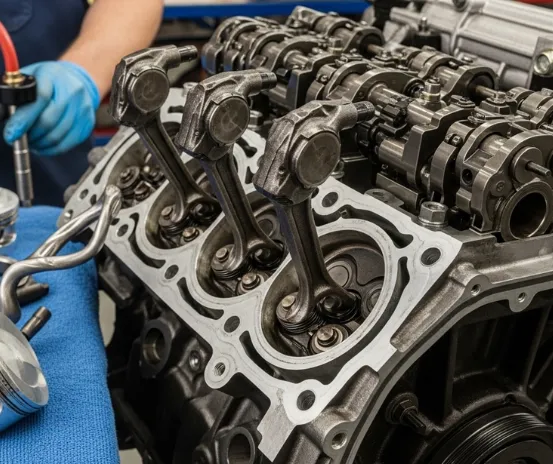
Engine Flood Damage Repair - Hydrolock and Water Ingestion
Flood water entering the combustion chamber causes hydrolock, bending connecting rods and seizing the engine. Full teardown, OEM part replacement, and compression testing included.
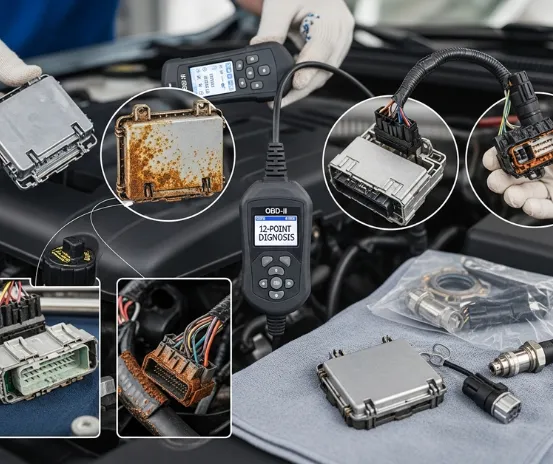
Electrical System Water Damage
Water damages the BCM, PCM, wiring harnesses, and ABS sensors. A 12-point OBD-II diagnostic identifies all faults, and corroded modules and connectors are fully replaced.
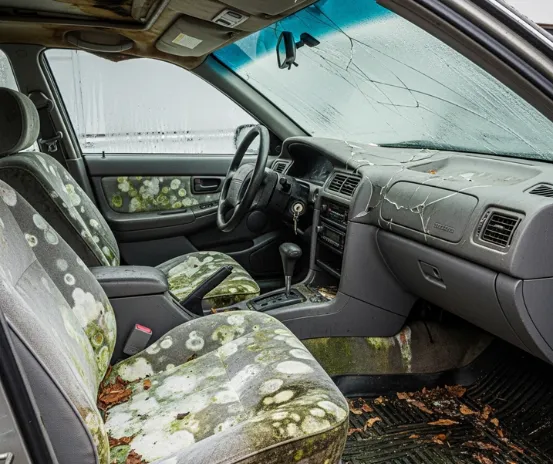
Interior Water Damage and Mold Removal
Wet carpets and seats develop mold within 48 hours. Al Zaabi Autocare extracts water, removes all soft furnishings, applies anti-microbial treatment, and dries the cabin below 45% humidity.
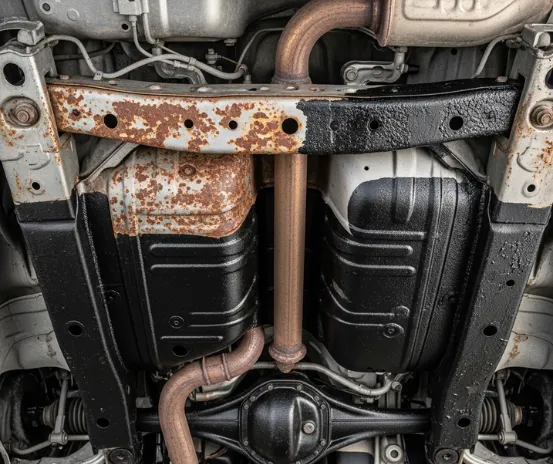
Underbody Rust and Corrosion Protection
Floodwater deposits mineral salts on steel subframes and brake lines. A 3-stage treatment covering rust removal, zinc-phosphate primer, and rubberised sealant protects the underbody for 5 years.
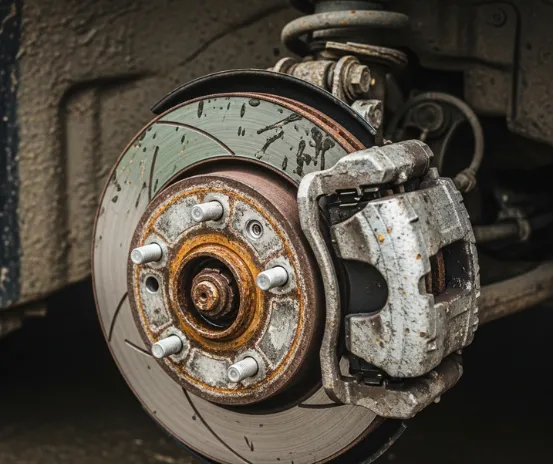
Brake and Suspension Water Damage
Moisture lowers brake fluid boiling point below DOT 4’s 230°C minimum, creating fade risk. Al Zaabi Autocare flushes the full brake circuit and load-tests all suspension components.
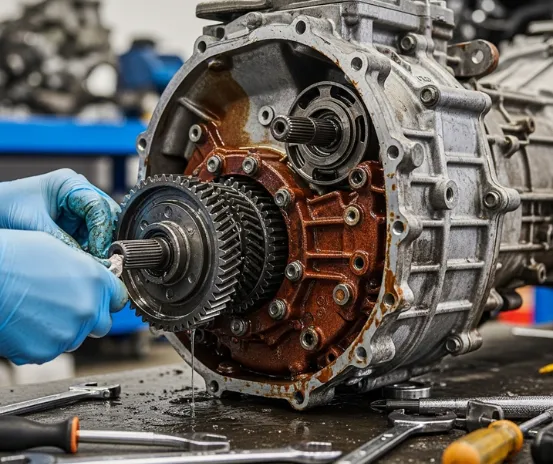
Transmission and Drivetrain Water Damage Repair
Water in the transmission destroys clutch packs and contaminates hydraulic fluid. Al Zaabi Autocare drains all fluids, inspects the valve body, and resets the transmission adaptations.
Why Choose Al Zaabi Autocare for Flooded Car Repairs?
Al Zaabi Autocare provides 4 core advantages that distinguish its flood damage repair service in Abu Dhabi: specialist diagnostic expertise, comprehensive multi-system inspection, OEM genuine parts, and documented quality assurance.
Al Zaabi Autocare technicians hold manufacturer-certified training from BMW Group, Mercedes-Benz, Toyota, and Nissan, providing the diagnostic depth required to identify latent water damage in modern vehicles with complex electronic architectures.
Flood-damaged vehicles present cascading failure patterns across interdependent systems, a condition that generalist workshops lack the tools and training to address comprehensively.
The Al Zaabi Autocare flood damage inspection evaluates 12 vehicle systems: engine internals, transmission, electrical harness, BCM, PCM, airbag module, ABS module, fuel system, brake circuit, suspension geometry, underbody structure, and interior air quality.
This multi-point assessment identifies both immediate damage and latent failure risks that surface weeks after the flooding event.
Al Zaabi Autocare sources parts exclusively from manufacturer-authorised distributors operating under the UAE Ministry of Economy trade regulations.
All replacement wiring looms, control modules, and mechanical components carry the original OEM part numbers required to maintain the vehicle’s warranty status and resale value in Abu Dhabi’s regulated used-car market.
Al Zaabi Autocare provides written repair reports documenting all inspected systems, parts replaced, and diagnostic readings before and after repair.
Customers receive a 12-month warranty on all replaced components and labour, covering any recurrence of water-related faults in the repaired systems.
Our Flooded Car Repair Process
Read More
The Al Zaabi Autocare flood damage repair process follows 5 structured stages to restore a water-damaged vehicle systematically, from initial water removal to final quality verification.
Water Extraction and Drying
Technicians extract standing water from the passenger cabin, boot, and engine bay using truck-mounted wet vacuums with a minimum extraction capacity of 200 litres per hour.
Industrial desiccant dehumidifiers reduce the vehicle’s interior relative humidity to below 45%, the threshold below which mould spore germination cannot occur, according to ASHRAE.
Drying cycles run for a minimum of 48 hours before any electronic component testing begins.
Electrical System Repair
Each wiring harness segment is tested for continuity, insulation resistance, and ground integrity using a Fluke 87V industrial multimeter and an automotive oscilloscope.
Corroded terminals are cleaned with electronic contact cleaner or replaced with sealed waterproof connectors.
All reprogrammable control modules, including the ECU, BCM, and TCM, undergo a full software reboot and calibration to clear flood-induced fault codes and restore correct sensor calibration values.
Engine and Transmission Service
Contaminated engine oil is drained and the oil filter replaced before the engine is hand-cranked to check for hydraulic resistance indicating residual water in the cylinders.
Spark plugs and fuel injectors are removed, and the cylinders are flushed with penetrating oil before the engine is restarted.
Transmission fluid is drained, the transmission pan is removed for sediment inspection, and fresh OEM-specified ATF is reinstated to the manufacturer’s correct fill volume.
Interior Restoration
All upholstery, carpet sections, and acoustic insulation panels are removed and assessed.
Salvageable components are cleaned using steam extraction at 120 degrees Celsius, a temperature that eliminates mould spores and dust mites according to the British Allergy Foundation’s cleaning standards.
Structurally compromised panels are replaced with OEM interior trim components. Anti-corrosion coating is applied to all exposed metal floor sections before re-installation.
Final Quality Check
A 25-point final inspection validates all repaired systems under real operating conditions: the engine is run through a full warm-up cycle, the transmission is shift-tested through all gear ranges, and the electrical system is checked with all loads active simultaneously.
The brakes are tested on the workshop’s four-wheel brake dynamometer. The vehicle exits service only when all diagnostic readings fall within the manufacturer’s published operational tolerances.
What To Do Immediately After Your Car Is Flooded
There are 5 critical actions to take within the first 60 minutes of a flooding event to minimise structural damage to the vehicle and preserve the integrity of safety systems.
1. Avoid Starting the Car
Starting a flood-damaged engine forces water through the fuel injection system and into the combustion chambers, causing immediate hydrolock damage that can bend or fracture connecting rods.
The ignition must remain off until a qualified technician has cleared the engine of water using the correct extraction procedure.
2. Disconnect the Battery
Disconnecting the negative battery terminal prevents short-circuit currents from travelling through water-saturated wiring harnesses, eliminating the risk of electrical fires in the cabin insulation or under-bonnet wiring.
The terminal is disconnected using a 10 mm spanner, with the negative lead secured away from the battery post to prevent accidental reconnection.
3. Record the Damage
Photograph and video the water level marks on door panels, seat bases, and dashboard trim before any drying begins.
These records document the flood depth, directly indicating which vehicle systems have been submerged, and provide the evidence required for insurance claims under the UAE Compulsory Motor Third Party Insurance framework.
4. Remove Water and Ventilate
Remove standing water from the foot wells using a portable wet-dry vacuum.
Open all doors and windows to establish cross-ventilation, and position a minimum of 2 portable fans at opposing ends of the cabin to accelerate evaporation.
Ventilating the interior within the first hour reduces the moisture exposure time for electronic components mounted under the seats, including seat control modules and side-airbag sensors.
5. Contact a Professional Repair Shop
Transport the vehicle to Al Zaabi Autocare in Abu Dhabi using a flatbed recovery truck, not by driving.
Driving a flood-damaged vehicle distributes contaminated water through sealed systems, including the differential, transfer case, and wheel bearings, causing accelerated wear that transforms a recoverable repair into a total loss.
Contact Al Zaabi Autocare directly to arrange priority flood damage recovery service in Abu Dhabi.
Testimonials
My Toyota Land Cruiser was submerged during the April rains in Abu Dhabi. Al Zaabi Autocare completed a full engine and electrical restoration within 8 days. The written diagnostic report clearly documented every replaced component. The vehicle has performed without fault for 4 months since the repair."
The interior of my Nissan Patrol had visible mould growth on the carpet and seats after flooding. Al Zaabi Autocare removed all affected materials, treated the cabin with anti-microbial agents, and restored the interior with OEM trim panels. The vehicle interior is now odour-free and structurally sound.
Frequently Asked Questions (FAQs)
How do I know if my car has flood damage?
A flood-damaged car exhibits 6 identifiable signs: a persistent musty odour inside the cabin, visible waterline stains on door panels or seat bases, corrosion on electrical connector pins under the dashboard, sand or sediment in the seat tracks or door sills, malfunctioning electronic systems including dashboard warning lights, and discolouration of the engine oil dipstick indicating water contamination.
A professional diagnostic inspection at Al Zaabi Autocare confirms the extent of damage across all 12 vehicle systems.
How soon should I bring my flooded car in for repair?
A flood-damaged vehicle requires professional inspection within 24 hours of the flooding event.
Mould begins colonising damp interior surfaces within 24 to 48 hours at temperatures above 25 degrees Celsius, the standard ambient temperature in Abu Dhabi. Electrical corrosion in wiring harness connectors accelerates within the same timeframe.
Delayed presentation increases repair complexity and cost, and raises the probability of a total loss assessment by the insurance provider.
Is it safe to start a flooded car?
Starting a flooded car is not safe. Water in the combustion chamber creates a hydraulic lock, an incompressible column that prevents piston travel and generates internal pressures exceeding 20 MPa, sufficient to fracture engine internals.
Water in the electrical system creates conductive pathways that can cause ECU failure, airbag system short circuits, or cabin electrical fires.
The vehicle must be transported to Al Zaabi Autocare by flatbed recovery truck without the engine being started.
What parts of my car are inspected and repaired?
Al Zaabi Autocare inspects and repairs 12 vehicle systems affected by flood damage: engine internals, transmission and drivetrain, fuel injection system, complete electrical wiring harness, ECU and BCM control modules, ABS and airbag safety modules, hydraulic brake circuit, all 4 callipers and brake lines, front and rear suspension geometry, underbody structural members, interior trim and insulation, and the climate control system.
A written inspection report itemises findings and recommended actions for each system.
How long does the repair process take?
The flood damage repair duration at Al Zaabi Autocare ranges from 3 days for vehicles with minor water ingress limited to the interior, to 14 working days for vehicles with engine hydrolock and full electrical system replacement.
The 12-system inspection conducted on the first day establishes an accurate timeline and cost estimate.
Repair duration depends on 3 variables: flood water depth, the number of systems requiring component replacement, and parts availability from the UAE manufacturer-authorised distributor network.
Do you use genuine parts for the repairs?
Al Zaabi Autocare uses exclusively OEM-genuine parts sourced from manufacturer-authorised distributors operating under UAE Ministry of Economy trade licences.
All parts carry the original manufacturer’s part number and are supplied with a manufacturer’s warranty certificate. The use of OEM parts preserves the vehicle’s factory warranty status and supports accurate valuation in the Abu Dhabi used-vehicle market.
Will insurance cover flood repairs?
Comprehensive motor insurance policies issued under the UAE Unified Motor Insurance Policy framework cover flood damage as a named peril under the ‘accidental damage’ or ‘natural disaster’ clause.
Third-party-only policies do not cover flood damage to the policyholder’s own vehicle.
The Al Zaabi Autocare flood damage inspection report, including photographic evidence, diagnostic data, and a cost-itemised repair estimate, constitutes the documentation required by UAE-licensed insurers to process a flood damage claim.
Can measures be taken to protect a car from future flood damage?
There are 5 evidence-based measures to reduce flood damage exposure in Abu Dhabi.
Park in elevated multi-storey car parks during heavy rainfall forecast by the UAE National Centre of Meteorology. Install door threshold seals on vehicles with degraded factory seals.
Avoid driving through standing water deeper than 15 cm. Subscribe to the UAE’s official flood alert notifications.
Maintain the vehicle’s underbody anti-corrosion coating on a 3-year replacement cycle to protect against long-term moisture damage.
Al Zaabi Autocare provides a complimentary flood damage inspection for all vehicles at its Abu Dhabi workshop. The inspection covers 12 vehicle systems and produces a written damage assessment report with a cost-itemised repair estimate, with no obligation to proceed.
The inspection is conducted by manufacturer-certified technicians using OBD-II diagnostic equipment and takes approximately 90 minutes to complete.
To book: Call Al Zaabi Autocare or submit an online booking request. Same-day and next-day inspection slots are available for flood-damaged vehicles, prioritised by damage severity.