
PPF vs Ceramic Coating: Which One Should You Choose?
Keeping a car's paint clean and protected is important, especially when the vehicle has a high-quality or expensive finish. Road dust, sand, sunlight, bird droppings, and small stones can slowly affect the exterior.
5 October 202611 minute readAll 150 guides
Keeping a car's paint clean and protected is important, especially when the vehicle has a high-quality or expensive finish. Road dust, sand, sunlight, bird droppings, and small stones can slowly affect the exterior.
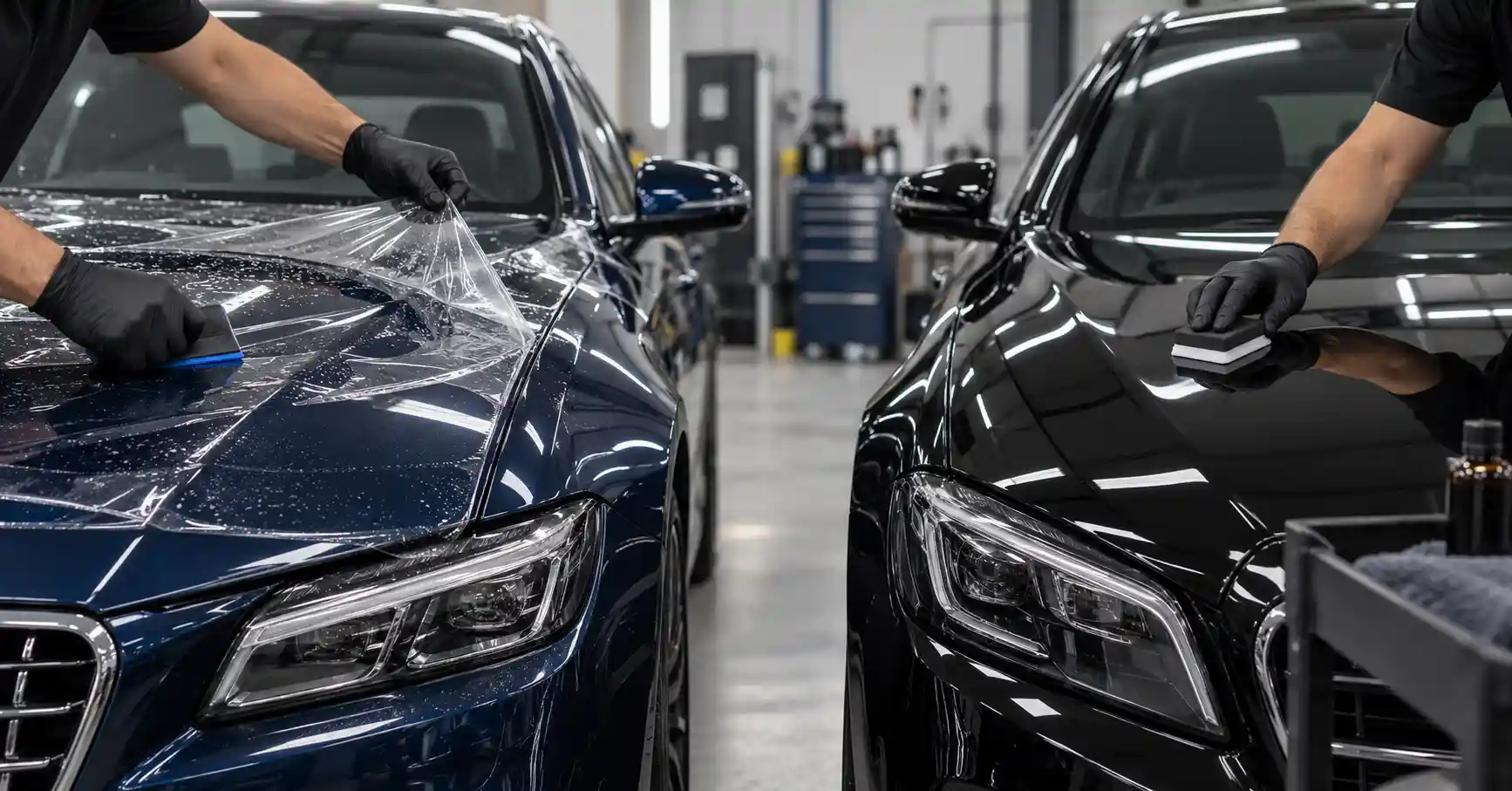
PPF and ceramic coating both protect car paint, but they work in different ways. Paint protection film creates a physical layer that helps defend against stone chips, light scratches, and road debris. Ceramic coating bonds with the paint and provides a hard, water-repellent surface that makes cleaning easier. The right choice depends on the type of protection your car needs, your driving habits, and your budget.
What Is PPF?
Paint protection film, commonly called PPF, is a clear protective layer installed over painted vehicle panels. Most modern films use thermoplastic polyurethane (TPU), which provides flexibility and impact resistance.
PPF works like a barrier between the original paint and outside hazards. It can help reduce damage from stone chips, road debris, light scratches, and other minor impacts.
Some films also have a self-healing top layer that can reduce fine surface marks when exposed to heat. PPF is often installed on the front bumper, hood, fenders, mirrors, and other high-risk areas.
What Is Ceramic Coating?
Ceramic coating is a liquid protective product that chemically bonds with the vehicle's paint. Once cured, it forms a thin, hard layer over the surface. Its main benefits include water repellency, easier cleaning, and resistance to some contaminants.
Water and dirt are less likely to stick strongly to a properly coated surface. Ceramic coating can also improve gloss and help protect against certain environmental contaminants.
However, it is not designed to absorb strong impacts. A ceramic coating cannot provide the same level of stone-chip protection as a physical film.
PPF vs Ceramic Coating: Complete Comparison
PPF and ceramic coating offer different types of paint protection, so comparing their features can make the choice easier.
PPF is mainly designed to protect against physical damage, while ceramic coating focuses on surface protection, gloss, and easier cleaning.
The table below compares their protection level, material, durability, maintenance, appearance, cost factors, and suitability for different driving conditions.
| Feature | Paint Protection Film (PPF) | Ceramic Coating |
|---|---|---|
| Main purpose | Protects paint from physical damage | Protects the surface and makes cleaning easier |
| Material | Usually made from thermoplastic polyurethane (TPU) | Liquid coating that chemically bonds with paint |
| Stone-chip protection | High | Very limited |
| Light scratch protection | Good | Limited |
| Protection from road debris | Good physical protection | Little physical protection |
| Protection from sand and dust | Helps reduce direct contact with paint | Helps contaminants release more easily |
| Protection from bird droppings | Good barrier when cleaned properly | Provides resistance, but contamination should be removed quickly |
| Water repellency | Good, depending on film | Excellent |
| Hydrophobic effect | Available on many modern films | One of its main benefits |
| Self-healing | Available with some PPF products | Generally not available |
| Gloss enhancement | Good | Excellent |
| Matte or satin finish | Available with some products | Usually keeps the existing paint finish |
| Physical barrier | Yes | No |
| Impact resistance | Stronger | Very limited |
| Paint correction before application | Often recommended | Very important because coating bonds directly to paint |
| Coverage options | Selected panels or full vehicle | Usually applied across the vehicle's painted surfaces |
| Common application areas | Bumper, hood, fenders, mirrors, door edges | Full painted exterior |
| Maintenance | Regular gentle washing | Regular gentle washing |
| Ease of cleaning | Good | Excellent |
| Risk of visible film edges | Possible if poorly installed | Not applicable |
| Risk of bubbles or lifting | Possible with poor installation | Not applicable |
| Repair after damage | Damaged film section can often be replaced | Coating may need removal and reapplication |
| Typical service life | Several years, depending on product and care | Varies by product, preparation, and maintenance |
| Installation process | Film cutting, fitting, application, and edge finishing | Paint preparation, coating application, and curing |
| Installation time | Usually longer | Usually shorter than full-body PPF |
| Initial cost | Generally higher | Generally lower than full-body PPF |
| Best for highway driving | Yes | Limited for impact protection |
| Best for city driving | Useful on high-risk areas | Useful for easy cleaning and surface care |
| Best for luxury cars | Strong paint protection | Gloss and surface protection |
| Can they be used together? | Yes, with a compatible coating | Yes, over compatible PPF |
| Main advantage | Physical protection from chips and light impacts | Water repellency, gloss, and easier maintenance |
| Main limitation | Higher cost and more complex installation | Does not provide strong impact protection |
When Should You Choose PPF?
PPF can be a good option when protecting the original paint from physical damage is the main goal. It is especially useful for cars that are driven often on highways where stones and road debris can hit the front end.
New luxury cars, sports cars, and vehicles with special paint finishes may also benefit from this type of protection. PPF can be applied to selected panels instead of the entire vehicle.
Front-end protection is a common choice because these areas receive more direct road impact. Full-body coverage is another option for owners seeking wider protection.
PPF Is Better for Stone Chips
Small stones can hit the bumper, hood, mirrors, and fenders at highway speeds. These impacts can remove paint and leave visible chips. PPF creates a flexible layer that can absorb some of this impact before it reaches the painted surface.
It cannot prevent every type of damage, especially from large or sharp objects, but it offers a level of protection that ceramic coating does not. Drivers who regularly travel on highways or roads with loose stones may therefore place greater value on impact protection.
PPF Helps With Light Scratches
Daily contact can leave fine scratches on painted panels. Washing with a dirty cloth, brushing against the car, or placing objects against the body can create surface marks. Some PPF products use a self-healing top coat that can reduce the appearance of light scratches when exposed to heat.
Deeper cuts can still damage the film. However, the original paint may remain protected underneath. If the film becomes badly damaged, the affected section can usually be removed and replaced without repainting the panel.
When Should You Choose Ceramic Coating?
Ceramic coating may suit owners who care more about gloss, water behavior, and easy cleaning. The coating creates a hydrophobic surface, which causes water to form droplets and roll away more easily.
This can help reduce the time needed to clean the vehicle. Ceramic coating also offers some resistance to environmental contaminants, although it does not make paint immune to stains or damage.
It is often chosen by drivers who keep their cars clean and want a glossy finish. Proper surface preparation is important because the coating bonds directly to the paint.
Ceramic Coating Makes Cleaning Easier
Dust, water spots, mud, and other contaminants can stick to untreated paint. A ceramic coating creates a smoother, water-repellent surface that can make regular washing easier. Dirt may release more easily when the vehicle is washed correctly.
However, the coating still needs proper care. It does not mean the car can be left dirty for long periods.
Safe washing methods, clean microfiber towels, and suitable car shampoo remain important. Regular cleaning also helps the coating maintain its appearance and performance over time.
Ceramic Coating Enhances Paint Gloss
One of the main reasons owners choose ceramic coating is its visual effect. A properly prepared surface can look deeper, smoother, and more reflective after coating. This can be especially noticeable on dark colors and metallic finishes.
Paint correction may be recommended before installation if the surface has swirl marks, oxidation, or other defects.
Since ceramic coating bonds to the paint, those imperfections can become more noticeable if they are not corrected first. The final appearance therefore depends on both the coating and the quality of surface preparation.
Is PPF Better Than Ceramic Coating in the UAE?
The UAE climate creates several challenges for vehicle paint, including strong sunlight, high temperatures, dust, sand, and road debris. PPF and ceramic coating address different parts of this problem. PPF is worth it for your car.
PPF provides a physical barrier against stone chips and light impact, while ceramic coating helps with water, cleaning, and surface contamination. Drivers who spend more time on highways may value PPF for high-risk panels.
Those who mainly drive around cities and want easier cleaning may prefer ceramic coating. The choice should be based on actual driving conditions rather than the product name alone.
Can You Use PPF and Ceramic Coating Together?
Yes, the two products can be used together. PPF can be installed on high-risk painted panels to provide physical protection, while ceramic coating can be applied to the remaining painted areas.
Ceramic coating can also be applied over compatible PPF products to improve water repellency and make the film easier to clean. This combination can provide both impact protection and surface protection.
However, product compatibility matters. The installer should confirm that the coating is designed for use over the specific PPF before applying it.
Which Areas Should Receive PPF?
PPF does not always need to cover the whole vehicle. Owners can select areas based on driving conditions and budget. The front bumper, hood, front fenders, mirrors, and headlights are common choices because they face road debris.
Door edges, door cups, luggage areas, and rocker panels can also receive smaller sections of film. These areas are exposed to scratches from regular use rather than highway impacts.
A professional installer can assess the vehicle and recommend coverage based on its design, driving pattern, and the level of protection required.
Which Option Costs More?
The cost depends on the vehicle size, product quality, coverage area, surface condition, and installation method. Full-body PPF generally costs more because the material is thicker and installation takes more time.
Ceramic coating can be less expensive for full-car coverage, but professional preparation may add to the total cost. The cheapest option is not always the most suitable one.
Owners should compare the expected protection, product warranty, installation quality, and maintenance requirements. A clear quote should explain what panels are covered and which preparation work is included.
How Long Do PPF and Ceramic Coating Last?
The lifespan of both products depends on product quality, installation, climate, washing habits, and exposure. Good-quality PPF can remain effective for several years when properly maintained.
Ceramic coatings also have different durability levels depending on the product and application. Neither option should be treated as permanent protection. Strong chemicals, poor washing methods, prolonged environmental exposure, and physical damage can reduce their service life.
Following the manufacturer's care instructions helps maintain the protective layer. Professional inspections can also identify damaged, lifting, or worn areas that need attention.
How Should You Maintain PPF and Ceramic Coating?
Both forms of protection need regular care. Wash the vehicle with a suitable car shampoo and clean microfiber materials. Avoid rough brushes, dirty towels, and harsh chemicals that can affect the protective surface.
Do not use excessive pressure around PPF edges. For ceramic-coated vehicles, regular washing helps remove contaminants before they become difficult to clean.
PPF owners should also inspect the film for lifting, cuts, or edge damage. Proper maintenance does not just improve appearance. It also helps the protective product perform closer to its intended service life.
PPF or Ceramic Coating for a New Luxury Car?
A new luxury car can benefit from either option, depending on the owner's priorities. PPF may be more suitable when the main goal is protecting expensive factory paint from stone chips and scratches. Ceramic coating may be more suitable when the owner wants strong water repellency, easier cleaning, and a glossy finish.
Some owners choose both because they provide different types of protection. For a new vehicle, early installation can also help protect the original paint before it collects road chips or swirl marks. Surface preparation remains important even on a new car.
How Do You Choose Between PPF and Ceramic Coating?
The best choice starts with identifying what you want to protect against. If highway driving, stone chips, and light impacts are your main concerns, PPF provides a stronger physical barrier.
If you mainly want easier washing, water repellency, and a glossy finish, ceramic coating may meet those needs. Your budget and expected ownership period also matter.
You can choose PPF for high-risk panels rather than the whole vehicle, or combine PPF with ceramic coating for broader protection. A professional inspection can help identify the areas that need the most protection.
Final Thoughts
PPF and ceramic coating are not direct replacements for each other because they solve different paint protection needs. PPF is mainly designed to protect against physical damage, while ceramic coating focuses on surface protection, water repellency, and easier cleaning.
PPF can be useful for highway driving and high-risk panels, while ceramic coating can suit owners who want easier maintenance and a glossy finish. Using both can provide broader protection when the products are compatible.
For professional PPF, ceramic coating, paint preparation, and other car care services, contact Al Zaabi Autocare for advice based on your vehicle and driving needs.
Paint Protection Film (PPF) at Al Zaabi Autocare
PPF is a clear, self-healing film applied over the paint. It absorbs stone chips, scratches and road debris, and can be removed later without damaging the finish underneath.
- Full body, front end or custom coverage
- Self-healing, non-yellowing film
- Computer-cut patterns for a precise fit
- Edge wrapping where the panel allows
Other Body and paint Guides
Think this is what your car is doing?
Bring it in and we will tell you. Free 360-degree health check and a written quote before any work starts.
- Where we are
- Plot no 69, Mussafah M-37, Abu Dhabi, UAE
- Opening hours
- Mon to Sat 9:00 AM to 10:00 PM
Sunday 9:00 AM to 7:00 PM