
Engine Overheating? Top Causes & Solutions for UAE Drivers
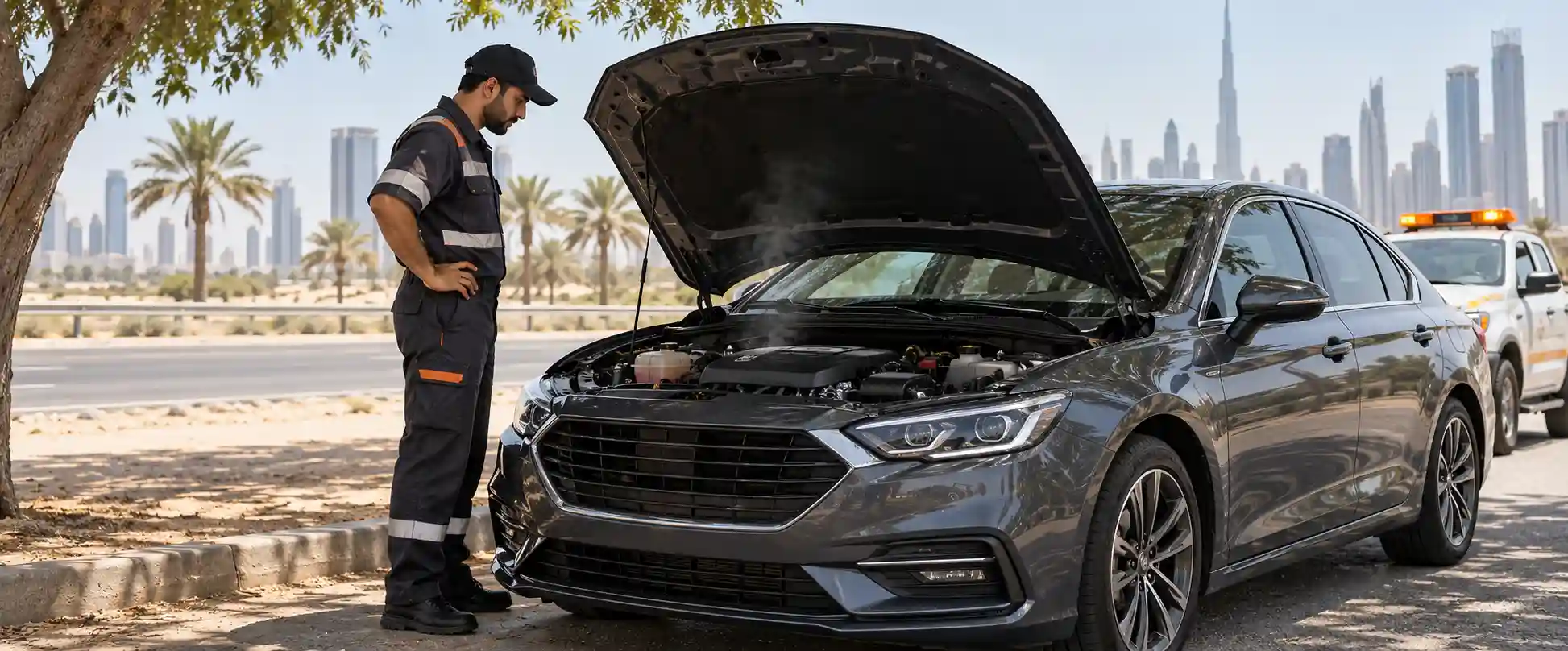
Seeing the temperature gauge rise can be stressful, especially when driving in the UAE heat. An overheating engine should not be ignored because continued driving can turn a small cooling problem into serious engine damage.
5 October 20268 minute readAll 150 guides
Seeing the temperature gauge rise can be stressful, especially when driving in the UAE heat. An overheating engine should not be ignored because continued driving can turn a small cooling problem into serious engine damage.
The main causes of engine overheating include low coolant, radiator problems, a faulty thermostat, cooling fan failure, water pump issues, and low engine oil. UAE drivers also face extra heat from high outdoor temperatures, traffic, and long periods of idling.
Stopping safely, allowing the engine to cool, and getting the cooling system checked quickly can help prevent expensive repairs.
Common Reasons Your Engine Overheats and How to Fix Them
Several cooling and engine problems can cause the temperature to rise. Some are simple to fix, while others need proper testing by a technician.
Finding the cause early is important because overheating can damage the head gasket, cylinder head, pistons, and other internal parts. The following causes are common areas that should be checked when an engine starts running too hot.
1. Low or Leaking Coolant
Coolant carries heat away from the engine and moves it toward the radiator, where the heat can escape. A low coolant level may happen because of a leak, evaporation, or poor maintenance.
You may notice coolant marks under the vehicle, a sweet smell, or a rising temperature gauge. Never open the coolant reservoir or radiator cap while the engine is hot because pressurized coolant can cause serious burns.
Once the engine has cooled, check the coolant level and arrange a professional inspection to find and repair the leak.
2. Blocked or Damaged Radiator
The radiator releases heat from the coolant before the fluid returns to the engine. Dust, dirt, insects, and road debris can reduce airflow through the radiator. Internal deposits can also restrict coolant flow.
Both problems can reduce cooling performance. This can be more noticeable in the UAE, where dust and high temperatures place extra demand on the cooling system.
A technician can inspect the radiator for blocked fins, leaks, corrosion, and internal restrictions. Cleaning the radiator or repairing or replacing it when needed can restore proper heat transfer.
3. Faulty Thermostat
The thermostat controls coolant flow between the engine and radiator. When the engine is cold, it stays closed to help the engine reach its normal operating temperature. Once the correct temperature is reached, it opens and allows coolant to move through the radiator.
A thermostat that remains closed can restrict coolant flow and cause overheating. A thermostat stuck open can also affect normal engine temperature and efficiency.
If testing confirms a faulty thermostat, replacing it with the correct specification can restore proper coolant circulation and temperature control.
4. Cooling Fan Failure
The radiator needs enough airflow to remove heat from the coolant. At low speeds or while sitting in traffic, the cooling fan becomes especially important because there is less natural airflow through the radiator.
A failed fan motor, damaged wiring, bad relay, or faulty temperature sensor can stop the fan from working correctly. Drivers may notice the engine temperature rising while the vehicle is stationary but improving when moving.
A technician should test the fan motor, fuse, relay, wiring, and control signal to identify the fault before replacing parts.
5. Water Pump Problems
The water pump moves coolant through the engine and cooling system. If its impeller becomes damaged or the pump develops a mechanical fault, coolant circulation can become weak. Some water pumps can also develop leaks around their seals.
Poor coolant flow can cause hot spots inside the engine and raise the overall temperature. Warning signs can include coolant leakage, unusual noises, overheating, or poor coolant circulation.
A professional inspection can confirm the condition of the pump. If it is damaged, replacing it can restore proper coolant movement and protect the engine from heat damage.
6. Low Engine Oil
Engine oil does more than reduce friction between moving components. It also helps carry heat away from internal engine parts. When the oil level becomes too low, lubrication and heat control can suffer.
This can increase friction and raise engine temperature, especially during demanding driving. Oil leaks, missed service intervals, or excessive oil consumption can cause a low level.
Check the oil according to the vehicle manufacturer's instructions and use the correct oil grade. If the level keeps dropping, have the vehicle inspected for leaks or internal engine problems rather than simply adding oil repeatedly.
7. Damaged or Blocked Coolant Hoses
Coolant hoses connect important parts of the cooling system, including the radiator and engine. Over time, heat and pressure can cause hoses to become hard, soft, cracked, swollen, or damaged.
A small hose leak can gradually reduce coolant levels and eventually cause overheating. A blocked hose can also restrict coolant circulation. During service, technicians can inspect hoses, clamps, and connections for signs of damage or leakage.
Replacing a worn hose is usually much simpler than dealing with engine damage caused by continued overheating.
8. Air Trapped in the Cooling System
Air pockets can prevent coolant from moving properly through parts of the cooling system. They may appear after coolant has been drained and refilled incorrectly or after a leak allows air to enter the system. Air can create poor circulation and uneven cooling around the engine.
Some vehicles require a specific bleeding procedure to remove trapped air. If overheating continues after a coolant service, the system should be checked rather than simply adding more fluid. A technician can bleed the system correctly and check for the reason air entered in the first place.
9. Head Gasket Failure
A damaged head gasket is a more serious cause of overheating. The head gasket seals the connection between the engine block and cylinder head while keeping engine oil, coolant, and combustion gases separated.
When it fails, coolant can enter the combustion chamber or combustion gases can enter the cooling system. Signs may include repeated overheating, white exhaust smoke, coolant loss, bubbles in the coolant system, or milky engine oil.
A technician may use a compression test, cooling-system pressure test, or combustion-gas test to confirm the problem. Prompt repair is important to limit further engine damage.
Why UAE Heat Can Make Overheating Worse?
High outdoor temperatures can place extra demand on the cooling system. When the air outside is already hot, the radiator has less temperature difference available to release heat from the coolant.
Heavy traffic can add another challenge because the engine continues producing heat while natural airflow is low. Air conditioning also adds load to the vehicle's thermal system.
A healthy cooling system should handle normal UAE conditions, but weak components can show problems sooner in extreme heat. Regular inspections of coolant, fans, radiator condition, and hoses can help prepare the vehicle for hot weather.
What Should You Do When the Engine Overheats?
If the temperature gauge reaches the hot zone or a warning appears, reduce the load on the engine and find a safe place to stop. Turn off the engine and allow it to cool naturally.
Do not remove a hot radiator cap, as the cooling system can be under high pressure. Do not continue driving simply because the warning disappears after a few minutes.
Check for obvious coolant leaks only after the engine has cooled enough to do so safely. If the vehicle continues to overheat, arrange roadside assistance or professional recovery instead of risking major engine damage.
Can You Prevent Engine Overheating?
Regular cooling-system maintenance is one of the best ways to reduce overheating risks. Check coolant levels, inspect hoses, follow the correct coolant replacement schedule, and make sure the radiator and cooling fans are working properly.
Engine oil should also be checked and changed at the recommended interval. UAE drivers should pay particular attention to cooling performance before long road trips and during the hottest months.
Warning signs such as temperature changes, coolant loss, unusual fan noises, or repeated overheating should be checked quickly instead of being ignored.
How Often Should the Cooling System Be Checked?
There is no single inspection interval that suits every vehicle. The manufacturer's service schedule should be the main guide because coolant types, service intervals, and system designs differ.
Older vehicles may need closer inspection because hoses, seals, pumps, and radiators naturally wear over time. Vehicles used heavily in traffic or extreme heat may also benefit from more frequent checks.
A routine service can include checking coolant condition, leaks, hoses, radiator performance, and fan operation. Regular inspections are especially useful before long journeys because they can identify weak parts before they fail on the road.
Why Professional Diagnosis Matters
An overheating engine can have several possible causes, and replacing random parts may waste money without fixing the real problem.
A professional technician can check coolant pressure, thermostat operation, fan performance, radiator flow, water pump condition, and engine-related faults.
Diagnostic tools may also help identify sensor or electronic control problems. In serious cases, pressure testing or combustion-gas testing may be needed. Proper diagnosis helps separate a simple cooling-system fault from major engine damage.
This approach can reduce unnecessary repairs and make sure the actual cause of overheating is addressed.
Final Thoughts
Engine overheating should always be treated as a warning that needs attention. Low coolant, radiator restrictions, thermostat failure, fan problems, water pump faults, low oil, damaged hoses, trapped air, and head gasket failure can all raise engine temperature.
UAE heat, traffic, and dust can add extra stress to a vehicle's cooling system, making regular maintenance important.
If your car is overheating or showing signs of cooling-system trouble, Al Zaabi Autocare can inspect the vehicle, identify the cause, and provide the required repair to help keep your engine running safely.
Car Overheating Repair at Al Zaabi Autocare
Overheating has several causes: a failed thermostat, a blocked radiator, a weak water pump or a head gasket. We test the whole cooling system rather than replacing parts one at a time.
- Full cooling system diagnosis
- Thermostat and water pump replacement
- Radiator and fan repair
- Head gasket testing
Other A/C and cooling Guides
Think this is what your car is doing?
Bring it in and we will tell you. Free 360-degree health check and a written quote before any work starts.
- Where we are
- Plot no 69, Mussafah M-37, Abu Dhabi, UAE
- Opening hours
- Mon to Sat 9:00 AM to 10:00 PM
Sunday 9:00 AM to 7:00 PM